The Wheel: From Potter's Disc to the Modern World


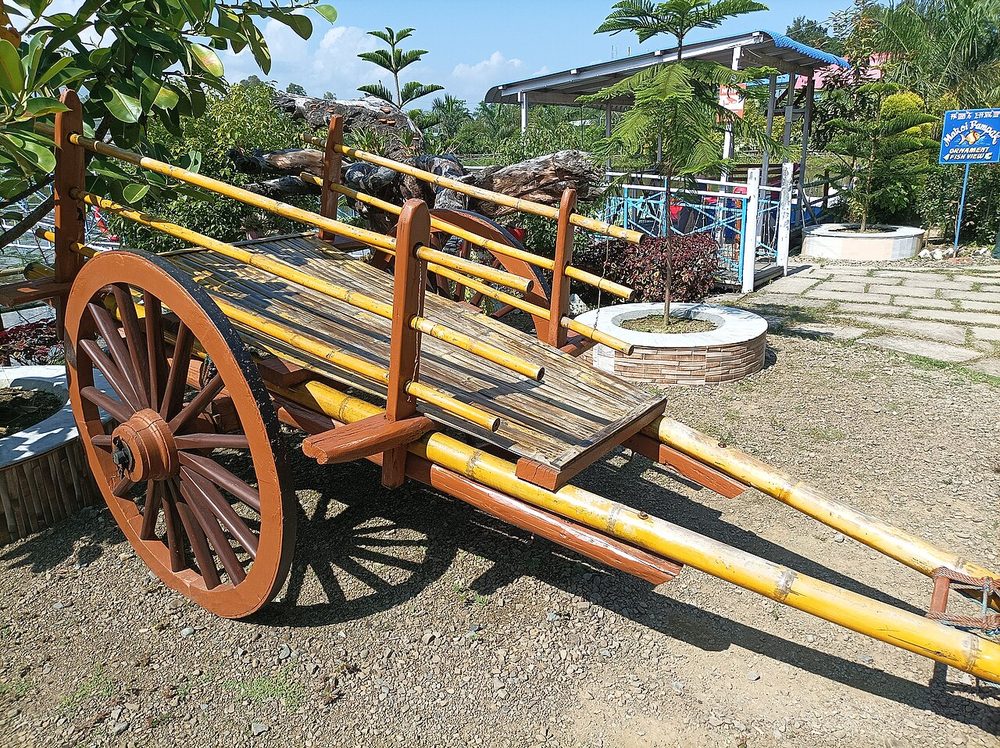
The wheel is often called humanity's greatest invention, and it is also one of the most misunderstood. It was not invented for transport at all. The first wheels were potter's wheels — spinning discs that let a craftsperson shape clay into smooth, symmetrical pots. Only centuries later did someone mount a wheel on an axle and use it to carry a load. And the wheel itself was never the clever part: the real invention was the axle and the bearing, the parts that let a wheel turn freely while carrying weight.
In short
The wheel appeared in Mesopotamia around 3500 BCE, first as a potter's wheel for shaping clay, with wheeled carts following by about 3000 BCE. The oldest surviving wheel, found in Slovenia's Ljubljana Marshes, dates to about 3200 BCE. The same principle — rotary motion around a fixed axle — later powered water wheels, gears, engines, and turbines.
A potter's tool first
The strongest evidence puts the first wheels in Mesopotamia, the land between the Tigris and Euphrates rivers in modern-day Iraq, around 3500 BCE. The region's cities — Ur, Uruk, and their neighbours — had dense populations, abundant river clay, and a real demand for pots. A potter working by hand can only make a vessel as symmetrical as their hands allow. A spinning disc changed that: with the clay turning steadily, the potter's hands could shape smooth, even walls, and produce many more pots in a day.
The earliest wheels were simple turntables, rotated by hand or with a stick. The fast wheel, spun with enough momentum to throw a pot from a single lump of clay, developed later, roughly between 3000 and 2400 BCE. Nobody knows the name of the inventor, and there probably was no single inventor: writing was only just being invented in Mesopotamia at the same time, and the wheel most likely evolved gradually, refined by generations of anonymous craftspeople.
From pots to carts
It took several more centuries before anyone used a wheel to move things. By around 3000 BCE, Sumerians were building solid wooden wheels — two half-discs of wood joined together and bound with leather — for ox-drawn carts and wagons. Lighter spoked wheels, which were far faster and better suited to chariots, appeared by about 2000 BCE.
The oldest surviving wooden wheel ever found comes not from Mesopotamia but from Slovenia. The Ljubljana Marshes Wheel, discovered in 2002, is a wooden wheel with its oak axle still attached, radiocarbon-dated to about 3200 BCE. It is the oldest physical wheel in the world, and it shows how sophisticated early wheelwrights already were: the axle ran in slots with a groove to hold grease, reducing friction. As one historian has put it, the wheel is not the invention — the bearing is.
Archaeologists still debate the exact place of origin. A study published in 2024 in Royal Society Open Science argued that the wheel was born even earlier, around 3900 BCE, among Neolithic copper miners in the Carpathian Mountains of south-eastern Europe. The Mesopotamian evidence remains the strongest, but the debate is a useful reminder: the wheel was not a single flash of genius in one place, but an idea whose time had come in several connected regions at once.
What the wheel unlocked
Once the wheel-and-axle existed, it spread into almost every machine humans built. Water wheels ground grain and powered mills for two thousand years. Gears — wheels with teeth — let one turning shaft drive another at a different speed, the basis of clocks, mills, and eventually engines. The potter's wheel itself never went away: it is still used by potters today, almost unchanged in principle after 5,500 years.
The wheel also changed what a society could do. Carts could move harvests, timber, and stone that no human or animal could carry alone. Chariots changed warfare. And when the wheel met the steam engine, in the 1800s, it became the railway — the machine that shrank continents. Every car, train, bicycle, and aeroplane landing gear in the world still runs on the same idea a Sumerian potter was using in 3500 BCE: a disc, turning freely on an axle.
Why the wheel took so long
It is worth asking why something so obvious took so long to appear. Part of the answer is that a wheel is useless without roads, draught animals, and a reason to move heavy loads — and for most of human history, people had none of those. The wheel also needs a flat, hard surface to be worth the trouble; on rough ground, a sledge or a pack animal works better. The wheel was not an idea waiting to be thought of. It was an answer to a problem that only cities, farming, and trade had created — and once those existed, the wheel arrived, more or less everywhere at once.
Sources: World History Encyclopedia, "Ten Ancient Mesopotamia Facts You Need to Know"; Royal Society Open Science, James et al., "How the wheel was invented" (2024); Britannica, "Wheel"; Smithsonian Magazine, "The Ljubljana Marshes Wheel" Checked 27 November 2026.