Computers: From Room-Sized Machines to a Chip
A modern smartphone holds more computing power than the machines that guided astronauts to the Moon — and it fits in a pocket. That did not happen by accident. It happened because of three inventions, each about twenty years apart: the electronic computer, the transistor, and the microprocessor. Each one took a machine that filled a room and made it smaller, cheaper, and more reliable — until, in the end, the computer disappeared into everything: phones, cars, washing machines, and watches.
In short
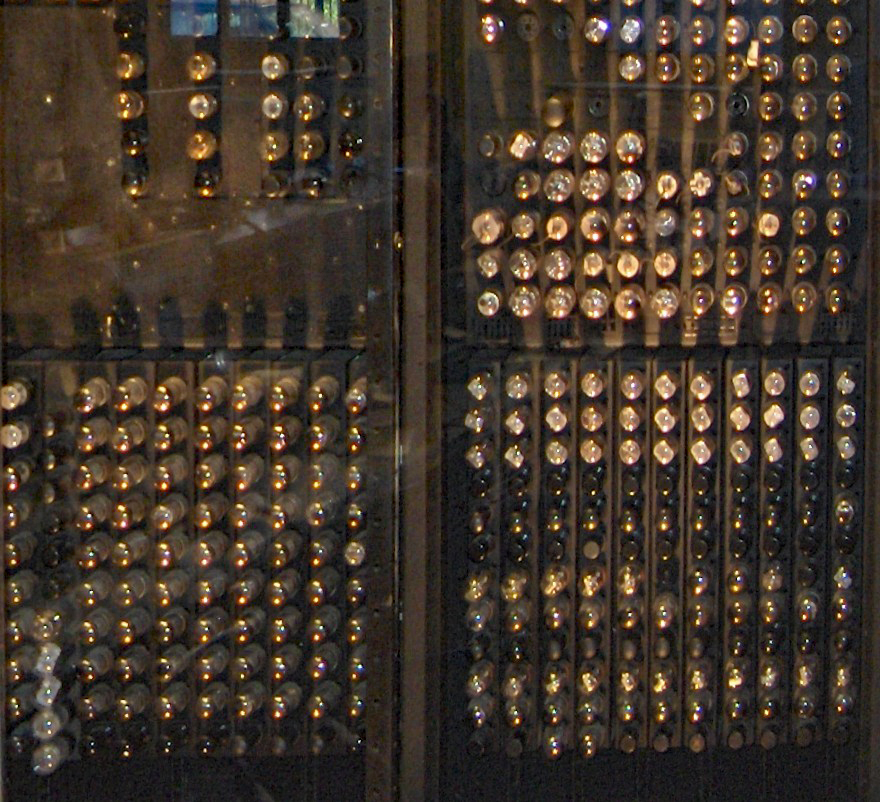
The first general-purpose electronic computer, ENIAC, was completed in 1945 and used 17,468 vacuum tubes, weighed about 30 tons, and filled a room. The transistor, invented at Bell Labs in 1947, replaced fragile tubes with a tiny solid-state switch. The Intel 4004, released in 1971, was the first commercial microprocessor — a whole processor on one chip, with 2,300 transistors — and it began the shrink that put a computer in every pocket.
The dreamers: Babbage and Lovelace
The idea of a computer is older than electronics. In 1837, the English mathematician Charles Babbage designed the Analytical Engine, a mechanical computer with a memory, a processor, and punched-card input — the same basic architecture every computer still uses. It was never built: the precision gears it needed were beyond the manufacturing of the day, and Babbage ran out of money and patience. But his friend Ada Lovelace, writing about the machine in 1843, saw further than he did. She wrote the first algorithm intended for a machine, and she predicted that such engines could one day compose music and produce art — not just calculate numbers. She is now recognised as the world's first computer programmer.
ENIAC and the vacuum tube
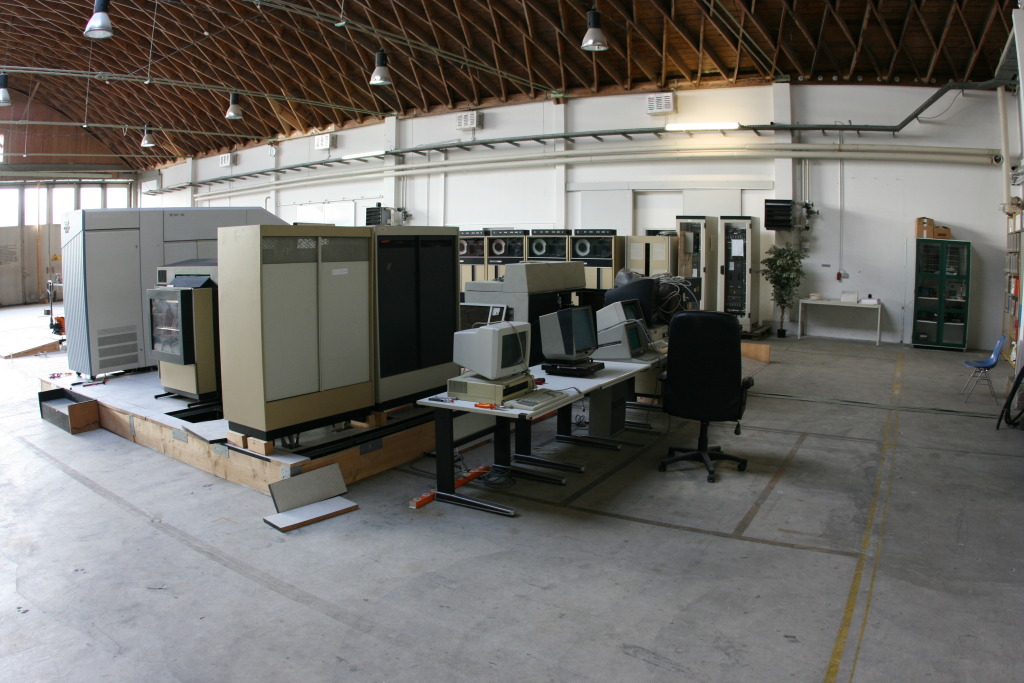
The first working electronic computers were built during and just after the Second World War, to calculate artillery tables and break codes. Britain's Colossus, running in 1943, broke German ciphers at Bletchley Park. America's ENIAC, completed in 1945 at the University of Pennsylvania, was the first general-purpose electronic computer. It used 17,468 vacuum tubes, weighed about 30 tons, filled a room of 1,800 square feet, and consumed 150 kilowatts of power. It could do 5,000 additions a second — fast for its time, slower than a pocket calculator today. And it was unreliable: vacuum tubes burned out constantly, and finding the failed one could take hours.
The transistor: a better switch
The breakthrough came in December 1947, at Bell Telephone Laboratories in New Jersey. John Bardeen, Walter Brattain, and William Shockley invented the transistor — a solid-state switch with no glass, no filament, and no vacuum. It did the job of a vacuum tube at a tiny fraction of the size and power, and it almost never burned out. The three men shared the Nobel Prize in Physics in 1956. Transistors made computers smaller, faster, and far more reliable, and they made the next step possible: the integrated circuit.
In 1958, Jack Kilby at Texas Instruments built the first integrated circuit, putting several components on a single piece of semiconductor. Robert Noyce at Fairchild made the design practical to manufacture on silicon the following year. From then on, engineers could put more and more transistors on each chip — a trend Gordon Moore, a co-founder of Intel, described in 1965. "Moore's Law", as it became known, predicted that the number of transistors on a chip would roughly double every two years. It held, with remarkable accuracy, for half a century.
The microprocessor and the personal computer
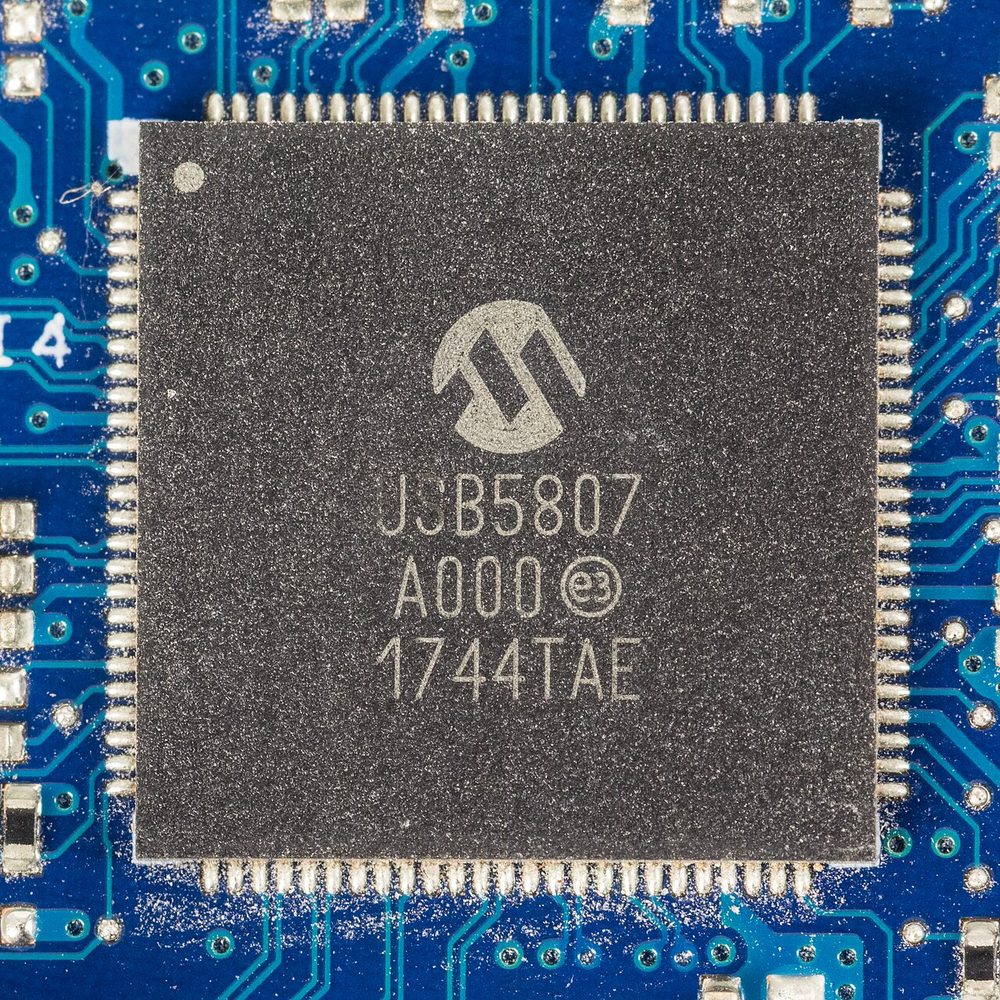
In 1971, Intel released the 4004, the first commercially available microprocessor: an entire central processing unit on a single chip, with 2,300 transistors, running at 740 kilohertz. It was designed for a Japanese calculator, but its meaning was much bigger — a computer could now be small and cheap enough to sell to ordinary people. The Altair 8800 kit of 1975, the Apple II of 1977, the IBM PC of 1981, and the Macintosh of 1984 turned that possibility into an industry. By the 1990s, computers were on desks in offices, schools, and homes around the world.
The numbers tell the story of the shrink. ENIAC's 17,468 tubes filled a room. The Intel 4004's 2,300 transistors fitted on a chip the size of a fingernail. A modern phone chip contains tens of billions of transistors, each one a switch smaller than a virus. The computer did not just get smaller — it became invisible, built into everything. That invisibility is the real triumph of the transistor and the microprocessor: the most powerful technology of our age is the one we no longer notice.
Sources: Computer History Museum, "ENIAC" and "The Transistor"; Britannica, "ENIAC" and "Microprocessor"; Bell Labs / Nokia, "The Transistor"; Intel, "The Intel 4004"; Smithsonian National Museum of American History, "The Analytical Engine" Checked 27 November 2026.