Electricity: Lighting Up the Modern World
For thousands of years, electricity was a curiosity: a spark from rubbed amber, a flash of lightning, a parlour trick. Then, in less than a century, it became the foundation of modern life — light, heat, motors, radios, computers, and now the chargers in every pocket. The story is not one invention but a chain: a discovery about magnets, a practical light bulb, a power station, and a long argument about how electricity should be delivered to people's homes.
In short
Michael Faraday discovered electromagnetic induction in 1831, the principle behind every generator and power station. Thomas Edison's practical incandescent lamp of 1879 made electric light usable, and his Pearl Street Station in New York, opened in 1882, was the first commercial central power plant. Alternating current, championed by Nikola Tesla and George Westinghouse, won the "War of the Currents" because it could travel long distances efficiently.
From sparks to generators
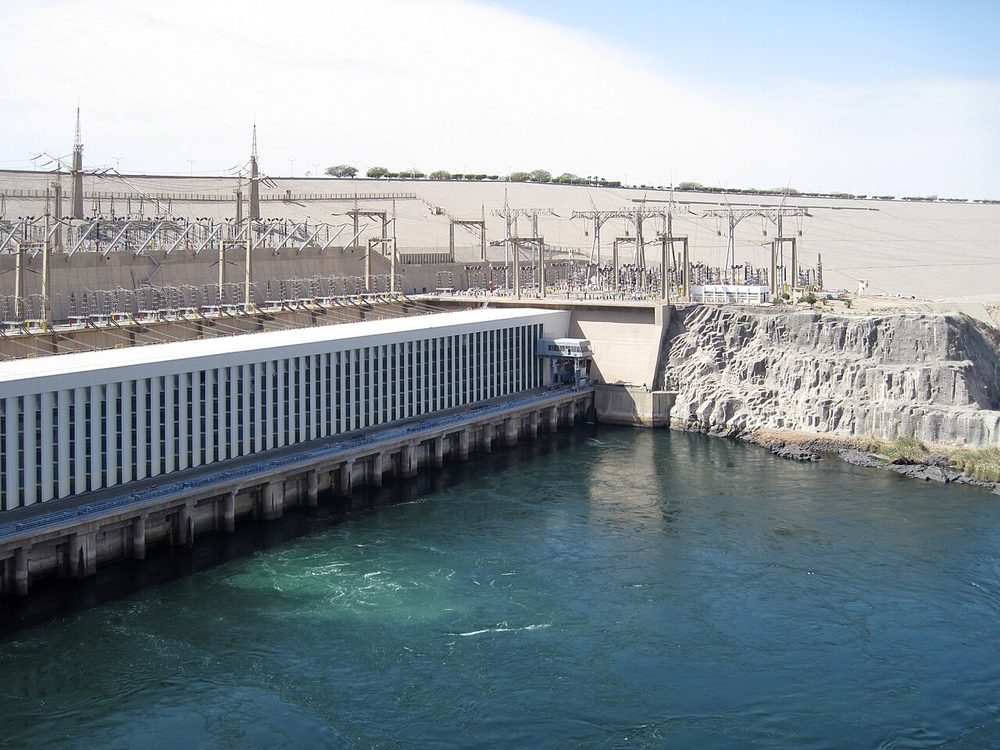
People have known about static electricity since ancient times — the Greek word for amber, elektron, is where the word comes from. Benjamin Franklin's famous kite experiment of 1752 showed that lightning is electricity, and by 1800 Alessandro Volta had built the first battery, a steady source of electric current. But nobody knew how to make electricity in large amounts until 1831, when the English scientist Michael Faraday discovered electromagnetic induction: move a magnet near a coil of wire, and an electric current flows. Spin the magnet, and the current keeps flowing. That single discovery is the principle behind every power station on Earth — coal, gas, water, wind, and nuclear plants all just spin a magnet inside a coil, in different ways.
Edison's light bulb
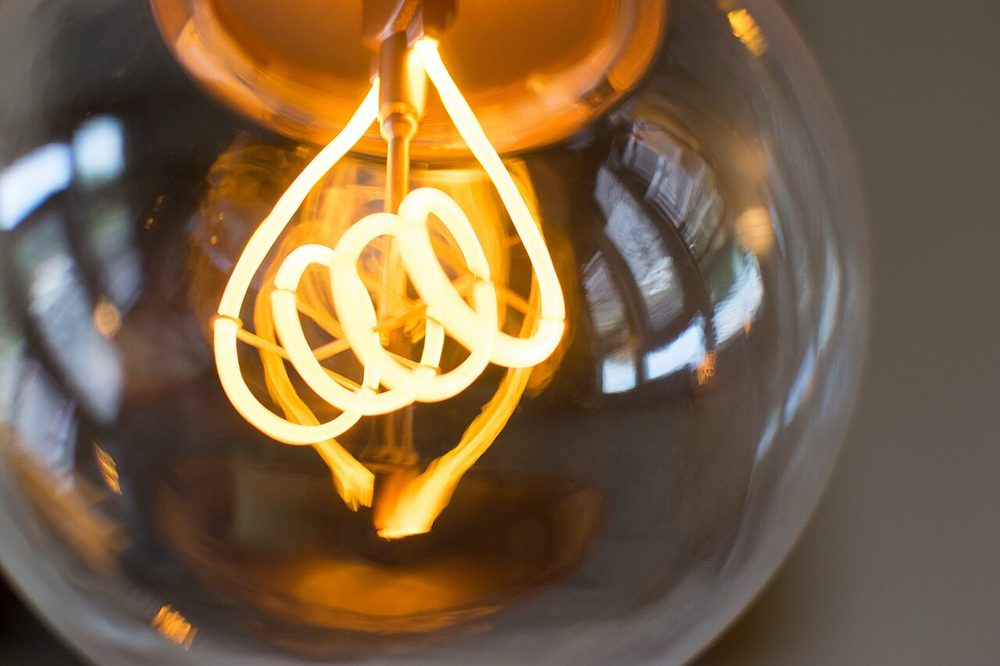
Electric light existed before Edison, but it was impractical: early arc lamps were blindingly bright and burned out quickly, and early bulbs lasted minutes. Edison's achievement at Menlo Park, New Jersey, in October 1879 was not inventing the bulb but making one that worked well enough to sell. His team tested thousands of materials for the filament before settling on carbonised bamboo, and their bulb burned for hours instead of minutes. Edison understood something his rivals did not: a light bulb alone was useless. People needed the whole system — generators, wires, meters, and switches — so he built it, street by street.
On 4 September 1882, Edison's Pearl Street Station in lower Manhattan began supplying electricity to about 80 customers in the surrounding blocks. It was the first commercial central power plant in the world, and it proved the business model: generate electricity in one place and sell it to many. Within a decade, electric lighting was spreading through the cities of America and Europe.
The War of the Currents
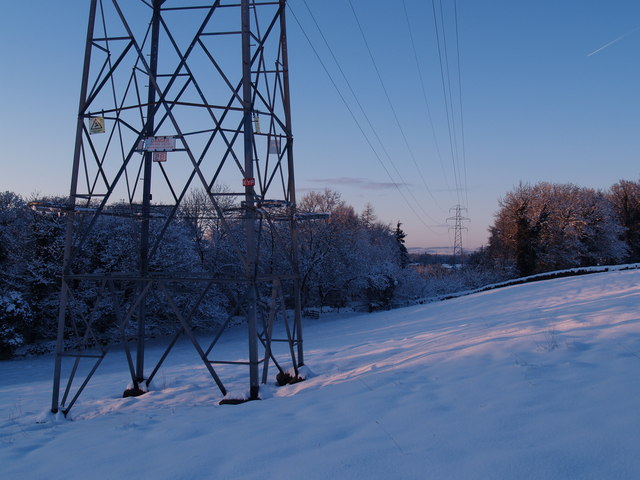
Edison's system used direct current (DC), which flows steadily in one direction. It had a fatal weakness: DC loses power quickly over distance, so a power station could only serve customers within about a mile. The alternative was alternating current (AC), which reverses direction many times a second and can be stepped up to very high voltages for long-distance transmission, then stepped back down for safe use in homes. AC was championed by the Serbian-American inventor Nikola Tesla and the industrialist George Westinghouse, and the contest between the two systems — the "War of the Currents" — was fought in newspapers, courtrooms, and public demonstrations through the late 1880s and early 1890s.
AC won, decisively, when Westinghouse lit the 1893 Chicago World's Fair with alternating current and then built the great hydroelectric plant at Niagara Falls, sending power to Buffalo, 25 miles away — a distance DC could never have managed. The modern grid is the result: power generated far away, carried at high voltage, and delivered to every home.
What electricity made possible
Electric light changed daily life first: streets became safer at night, factories could run after dark, and homes no longer depended on smoky oil lamps and candles. Then came the electric motor, which could be small enough to power a fan or large enough to drive a train. Electric motors replaced steam engines in factories, because a motor could be placed exactly where it was needed instead of being driven by belts from a single central engine. Refrigeration, washing machines, radios, and later computers and phones all followed from the same cheap, flexible power.
Today, electricity is so ordinary that we only notice it when it fails — yet it remains the backbone of everything else on this site. The internet runs on it, smartphones charge from it, and the newest challenge is making it cleanly: wind, solar, and nuclear power are replacing the coal that fed the first stations. Faraday's spinning magnet is still the heart of the system; only the thing doing the spinning has changed.
Sources: Britannica, "Michael Faraday" and "Thomas Edison"; US Department of Energy, "History of the Electric Light"; Smithsonian National Museum of American History, "Edison's Pearl Street Station"; Institute of Electrical and Electronics Engineers (IEEE), "The War of the Currents" Checked 27 November 2026.