Writing and the Printing Press: How Knowledge Learned to Travel

Before writing, everything a person knew died with them, except what they could pass on by speaking. Writing changed that: it let knowledge outlive its author and travel further than any traveller. But for more than four thousand years, every copy of a book still had to be made by hand, slowly and at great cost. Then, in the 1440s, a German goldsmith named Johannes Gutenberg combined movable metal type with a screw press — and the price of knowledge collapsed. Within a single lifetime, Europe went from a world of a few thousand hand-copied books to millions of printed ones.
In short
Writing began in Mesopotamia around 3400 BCE, with cuneiform marks pressed into clay, and it took thousands of years for books to become common. Gutenberg's movable-type printing press, working by about 1450, changed that: his 42-line Bible of about 1455 was the first major European book printed with movable type, and by 1500 presses had produced an estimated 8 to 10 million books.
Writing: memory that outlives us
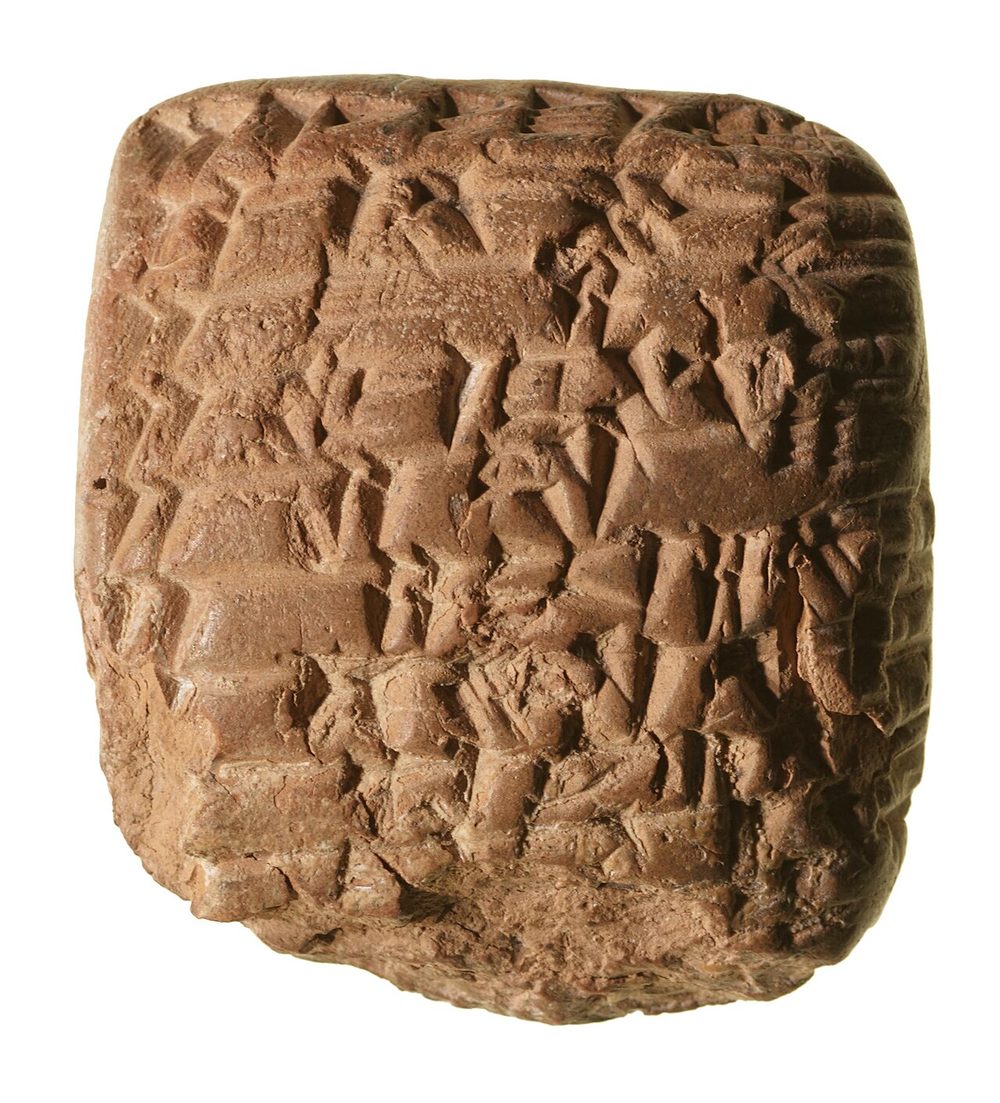
The first writing appeared in Mesopotamia around 3400 to 3300 BCE. It began as a bookkeeping tool: wedge-shaped marks pressed into wet clay tablets to record grain, livestock, and taxes. Over centuries those marks, called cuneiform, grew into a full writing system that could record laws, stories, and poetry. Egypt developed hieroglyphs at about the same time, around 3250 BCE, and writing was invented independently in China and in Mesoamerica as well.
Writing changed what a society could remember. Laws could be written down and applied the same way in every city. Knowledge could be stored, checked, and built on by people who had never met the author. But a written text was still a rare and fragile thing: each copy had to be made by a scribe working by hand, and a single book could take months. Books were luxuries owned by temples, courts, and the very rich, and most people never saw one.
Printing before Gutenberg
Printing itself was not Gutenberg's invention. In China, woodblock printing — carving a whole page into a block of wood, inking it, and pressing paper onto it — was already in use by the 7th century CE. The oldest surviving dated printed book in the world is the Diamond Sutra, a Chinese Buddhist text printed in 868 CE. Movable type also existed in China and Korea centuries before Gutenberg: ceramic type in China in the 11th century, metal type in Korea in the 13th. What Gutenberg did was different: he built a complete system that worked at scale in Europe, and he did it with materials and machines Europe already had.
Gutenberg's system
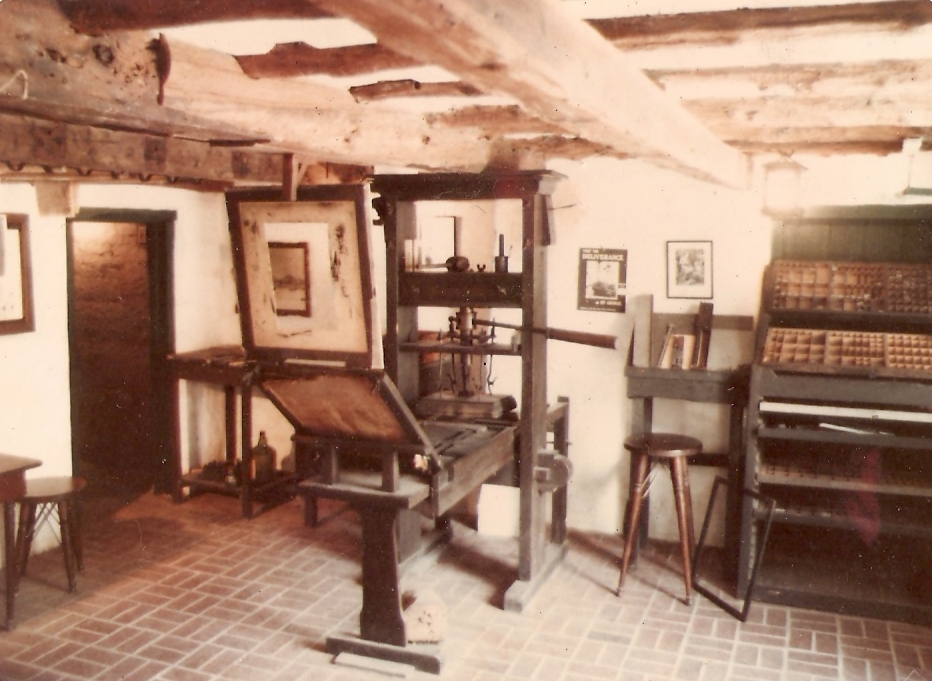
Johannes Gutenberg was a goldsmith from Mainz, in Germany, and his training mattered. He knew how to cast small metal objects precisely, and he used that skill to cast individual letters — "sorts" — from an alloy of lead, tin, and antimony. Each letter could be arranged into a page, inked, printed, and then rearranged for the next page. He developed a thick, oil-based ink that clung to metal type, and he adapted the screw press — a device already used for wine and olive oil — to press paper evenly onto the inked type.
By about 1450 his press was working in Mainz. His great demonstration was the 42-line Bible, printed around 1455: a large Latin Bible of superb quality, produced in multiple copies on six presses at once. It was the first major book printed with movable type in Europe, and it proved the system worked. Within about twenty years, printing presses were operating in all the major cities of Western and Southern Europe, and by 1500 they had produced an estimated 8 to 10 million books — more, it is often said, than all the scribes of the previous thousand years combined.
What cheap books changed
The effects were enormous and fast. When books were expensive, only a few people could read them, and new ideas spread slowly. When books became cheap, literacy spread, schools multiplied, and ideas could travel faster than any army. The Renaissance, the Protestant Reformation, and the Scientific Revolution all ran on printed paper: Luther's writings, Copernicus's astronomy, and Vesalius's anatomy all reached readers they could never have reached by hand copying.
Printing also changed what it meant to be wrong. A hand-copied book is different in every copy — errors creep in with each scribe. A printed book is identical in every copy, so readers in different cities could argue about the same text, check the same page, and correct the same mistake. That simple property — identical copies — is the foundation of modern science, modern law, and modern news. The printing press did not just make books cheaper. It made knowledge something people could share, check, and build on together.
Sources: LibreTexts, "Print" (Gutenberg and the printing press); Britannica, "Johannes Gutenberg" and "History of publishing"; British Library, "The Diamond Sutra"; World History Encyclopedia, "Cuneiform" Checked 27 November 2026.